Why did working at Method appeal to you?
Method’s focus on sustainable design was the main draw for me. I wanted to work somewhere where the projects have a tangible and positive impact. It’s not just technically interesting work but work that genuinely contributes to future-proof buildings and a lowering carbon footprint of the built environment. That ethos comes through in the projects Method takes on and the way the team approaches design.
What happened at your interview?
I was asked to prepare and deliver a five-minute presentation, which was an opportunity to show how I communicate technical ideas. After that, the interview moved into a discussing my background and CV, and motivations, as well as some technical questions. Some questions covered areas and concepts I hadn’t directly learnt about on at that point, but the team were less interested in whether I knew the answer and more interested in how I approached the problem.
Main responsibilities / typical day
The job is very varied day-by-day, which is one of the things I enjoy most. On any given day I might be speaking with a client about design progress, attending a design team meeting with architects and structural engineers, running heat loss or electrical load calculations, producing sketches and drawing layouts, visiting a site to survey existing services, or carrying out detailed lighting modelling in Dialux. The variety keeps the role engaging and means you’re constantly applying different skills.
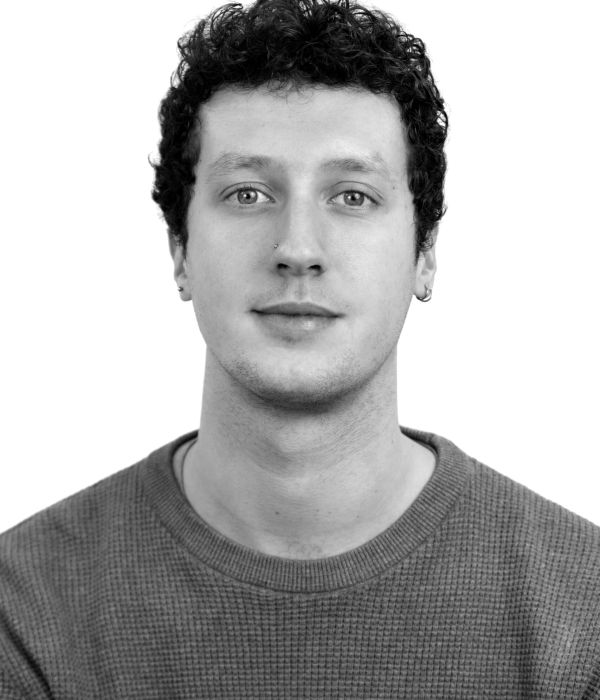
Gabriel Burke
What do you enjoy about your job?
The collaboration element and the technical depth are things I like most. Working with architects, structural engineers, and clients to solve real design problems is genuinely satisfying, especially when a complex coordination challenge gets resolved well. What keeps the job interesting beyond that is the broad nature of the discipline itself- building services spans a wide range of systems, and the design landscape is constantly shifting. Regulations are updated, new technologies enter the market, so every project brings a different set of constraints and requirements.
Challenging aspects
Managing concurrent workloads across multiple live projects is what I find to be most demanding part of the role. Deadlines rarely fall conveniently, so learning to prioritise effectively and communicate clearly when timescales are tight, are important skills you develop over time. It’s a challenge, but it also builds a level of resilience and organisation that’s genuinely useful throughout your career.
Skills and qualifications from university that you use in your job
I’d say problem-solving is the most transferable skill. Having the ability to break down a complex problem, work through it methodically, and arrive at a reasoned answer applies to almost everything in building services design. Technically, thermodynamics was the most directly relevant topic to my role, through heat loss calculations, and understanding how buildings lose and gain energy. Programming and coding skills have also been useful for automating calculations and handling data efficiently, which is increasingly valuable as the industry moves towards more computational design approaches.
Where do you see yourself in the future?
Leading projects and managing client relationships directly, taking full ownership of a scheme from early concept through to completion. Alongside that, achieving chartership is a clear near-term goal. I am currently working towards IMechE chartership. There are several routes available to building services engineers depending on your background and degree ( e.g. CIBSE, IMechE, IET).
Advice for anyone thinking of going into M&E engineering
Get comfortable with uncertainty early. You will regularly be asked questions you don’t know the answer to by clients, contractors, and other disciplines. Learning to reason through a problem confidently rather than waiting until you know all the answers is an important skill. Alongside that, I would say invest time in understanding both mechanical and electrical disciplines even if you lean towards one, and work on being able to communicate technical concepts as clearly as possible, as we regularly work with both technical and non-technical people.